
CAPTURE / YOUR HISTORY, PRESERVED
Your history.
Ready for what’s next.
Turn decades of drawings, reports, and records into searchable, structured knowledge.
FROM FRAGILE ORIGINALS TO SEARCHABLE RECORDS
The detail stays. The possibilities grow.
Preserve the original record while making its content easier to find and use. Drag the comparison slider—or use your keyboard to move it.
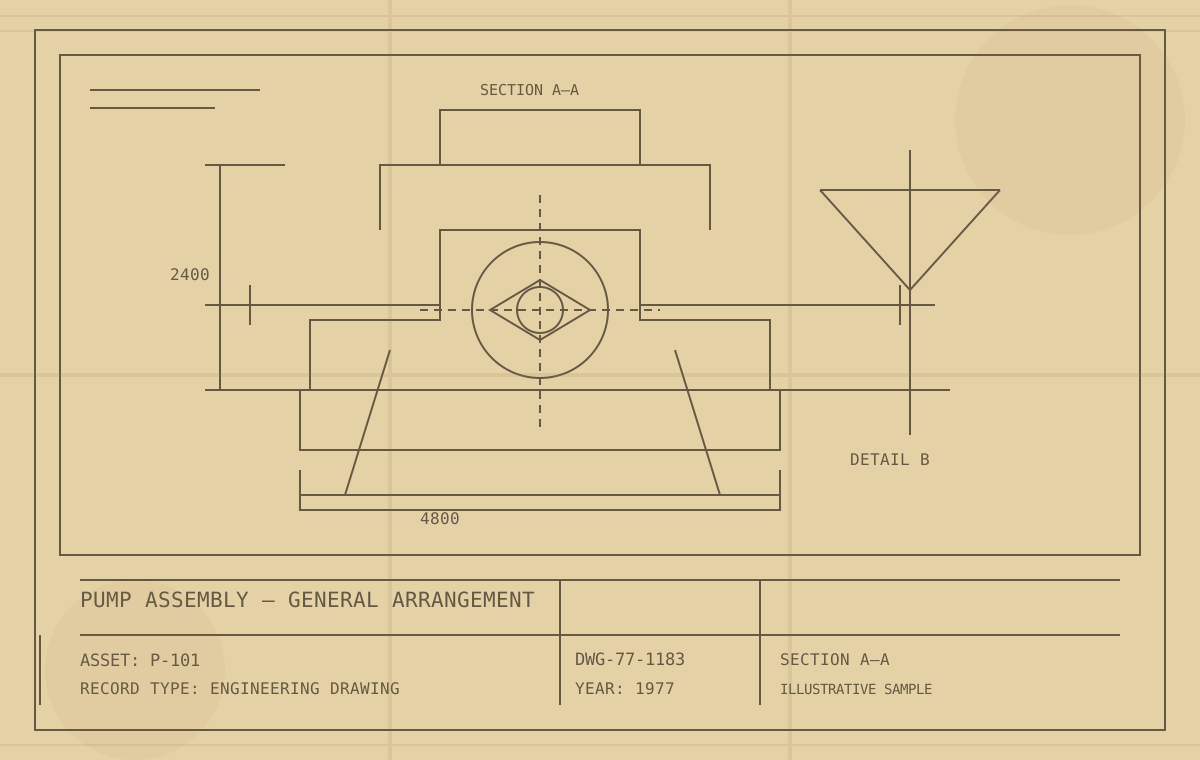
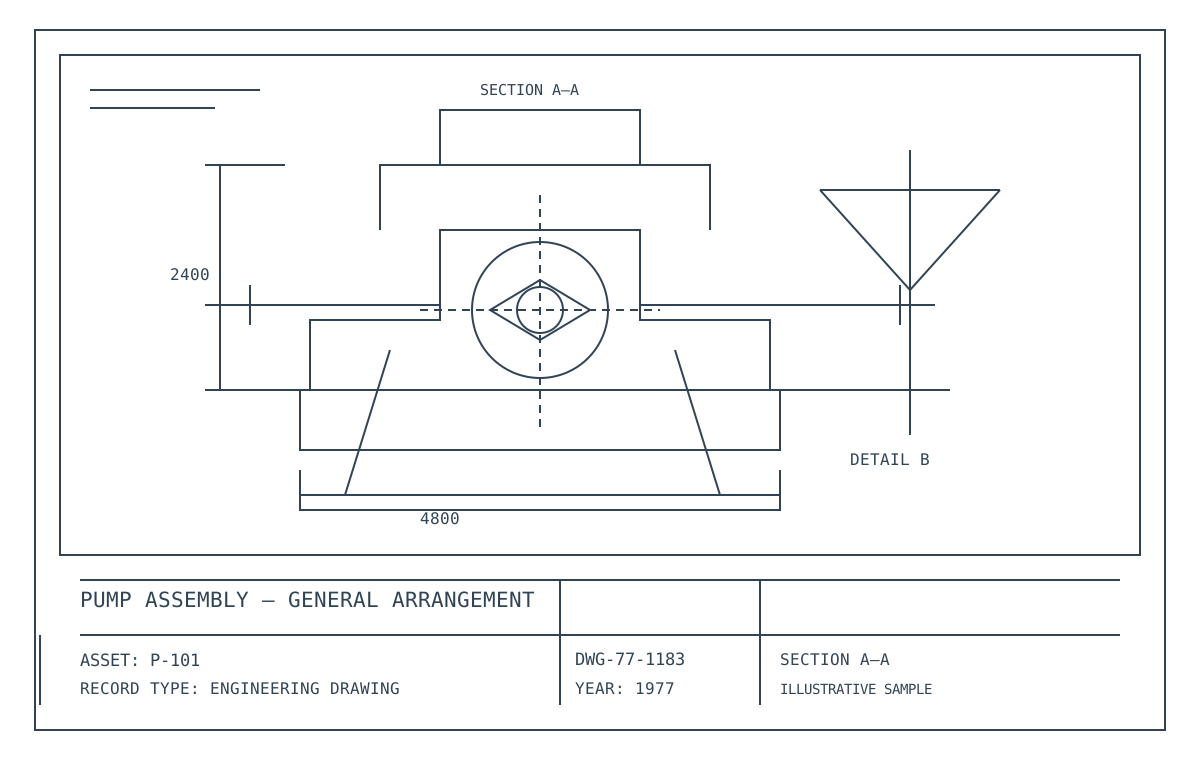
Illustrative comparison—not a customer record or a measured OCR result. Drag the slider to explore the two views.
THREE STEPS FROM ARCHIVE TO ANSWERS
Capture. Organize. Activate.
01
Capture
Digitize and extract information from drawings, reports, and records—even challenging documents.
03
Activate
Put your institutional knowledge to work with search and AI assistance.
SPECIALIST CAPTURE, FROM START TO FINISH
Care at every stage.
A structured five-stage process protects your documents and delivers a consistent digital collection.
01
Access & inventory
Map physical archives, shared drives, and legacy storage to understand what exists and where it resides.
02
Discovery & analysis
Review document types, formats, duplicates, date ranges, condition, and special handling requirements.
03
Deep scan & cleanup
Digitize, normalize, and enhance records with OCR, metadata tagging, and quality validation.
04
Directory creation
Arrange physical and digital records into a structured collection aligned with operational workflows and retention requirements.
05
Delivery
Receive a searchable digital archive ready for long-term access and the next phases of your project.
EVERY DOCUMENT. EVERY FORMAT. EVERY ERA.
Specialist care for difficult records.
Fragile, handwritten, and early records
High-resolution capture and careful handling preserve the detail in aged ledgers, handwritten records, and fragile originals.
Typewritten records and carbon copies
Adaptive OCR and optimized grayscale profiles help recover text from inconsistent ink, thin paper, and older duplicating methods.
Oversized drawings and modern digital files
Capture large-format technical drawings and bring born-digital files into the same collection through ingestion, deduplication, normalization, and conversion.
Chain of custody and secure handling
Inventory and handling records track materials through collection, transport, scanning, and delivery. The Capture plan sets out security and special handling requirements.
Return or secure destruction
After validation, originals can be returned or, where retention policies and legal requirements permit, securely destroyed with documentation. Disposition is agreed as part of the project.
Retention and future access
Capture plans account for retention schedules, legal holds, and access requirements. Deliverables use widely supported formats to support long-term usability.
THE NEXT CHAPTER STARTS HERE
Ready to put your history to work?
Start with an assessment of your records, their condition, and the opportunities ahead.
Start with a conversation about your records and your goals.